What we do
Accelerating cardiovascular drug discovery with stem-cell-derived heart models and AI-powered functional analysis
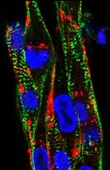
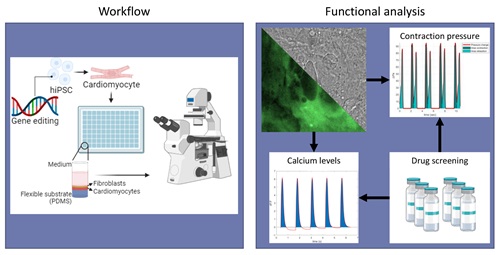
HeartCHIP is an advanced in vitro screening platform designed to evaluate cardiac function, drug efficacy, and cardiotoxicity using human induced pluripotent stem cell (iPSC)-derived cardiomyocytes.
By combining high-content video microscopy, automated motion analysis, and disease-specific cardiac models, HeartCHIP provides a faster and more predictive alternative to traditional preclinical screening approaches.
Built for researchers, biotech companies, CROs, and pharmaceutical innovators.
Why HeartCHIP?
Cardiovascular drug development remains one of the most challenging areas in medicine.
Many promising therapies fail during development because conventional models do not accurately predict human cardiac responses.
HeartCHIP addresses this challenge through:
- Human stem-cell-derived cardiac models
- Automated high-throughput screening
- Non-destructive functional imaging
- AI-driven motion and contraction analysis
- Disease-specific cardiac phenotyping
- Reduced dependence on animal models
The Technology
Human Cardiac Models
HeartCHIP uses iPSC-derived cardiomyocytes and engineered cardiac tissues that closely mimic human heart function.
Functional Video Microscopy
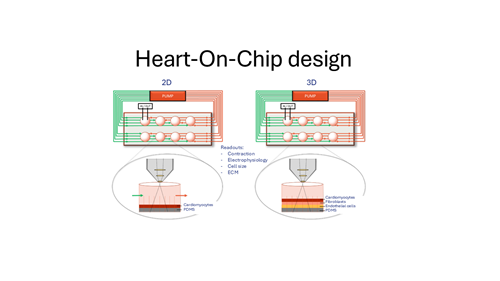
Live cardiac tissue is continuously monitored using high-resolution imaging, enabling quantitative assessment of beating behavior and tissue mechanics.
Advanced Analytics
Our software automatically measures:
- Beating frequency
- Contraction force
- Relaxation dynamics
- Tissue deformation
- Motion abnormalities
- Functional response to compounds
Explainable AI
Machine learning models identify healthy and diseased phenotypes while providing interpretable insights into the underlying cardiac behavior.
Applications
Drug Discovery
Screen and prioritize promising therapeutic compounds earlier in development.
Cardiotoxicity Testing
Identify potential cardiac safety risks before costly clinical trials.
Disease Modeling
Study patient-specific mutations and mechanisms underlying heart disease.
Translational Research
Bridge the gap between laboratory research and clinical application using human-relevant models.
Validated Through Collaborative Research
HeartCHIP was developed through a multidisciplinary collaboration involving:
- Erasmus MC
- Ncardia
- ibidi
- InnoSer
- ESP Consultancy
The platform has been validated using compounds with known cardiac effects, disease-specific cellular models, and comparative preclinical studies.
Current Technology Readiness Level: TRL 5Scientific Impact
The HeartCHIP project has generated:
- Peer-reviewed scientific publications
- AI-based cardiac motion analysis methods
- High-throughput culture protocols
- Disease-specific cardiac models
- New collaborative cardiovascular research programs
Our work contributes to the future of precision cardiovascular medicine and next-generation drug development.
Partners
HeartCHIP was developed through collaboration between
- Erasmus MC
- ibidi
- Ncardia
- ESP Consultancy
- InnoSer
Together, the consortium combined expertise in stem-cell biology, cardiovascular disease, imaging, software development, and preclinical validation.

Research Highlights
Advanced Motion Analysis
HeartCHIP includes multiple complementary analysis approaches:
- Optical flow-based contraction profiling
- Displacement analysis
- Deformation analysis
- Deep-learning classification
Together these methods provide comprehensive characterization of cardiac tissue function.
Human-Relevant Disease Models
The platform has been applied to:
- Hypertrophic cardiomyopathy
- Heart failure models
- Extracellular matrix remodeling studies
- Drug-induced cardiotoxicity assessment
Publications & Scientific Output
The HeartCHIP consortium has generated multiple peer-reviewed publications, conference presentations, student theses, and collaborative research projects.
Research outcomes include advances in:
- Cardiomyocyte contractility analysis
- AI-based motion classification
- Disease-specific cardiac modeling
- High-throughput functional screening
Publications:
Interested in collaboration, licensing opportunities, validation studies, or platform access?
HeartCHIP
Rotterdam, The Netherlands
|
|
|


Advancing cardiac innovation through human-relevant science