About our research group/lab
We study mechanisms of aberrant gene expression leading to leukemic transformation of myeloid progenitor cells in the bone marrow. Those studies have increased our understanding of the molecular biological mechanisms of associated with the distinct subtypes of acute myeloid leukemia (AML). Each subtype can be distinguished from others based on unique gene expression and epigenetic signatures. Most subgroups are associated with very specific gene mutations, such as in CEBPA or in EVI1.
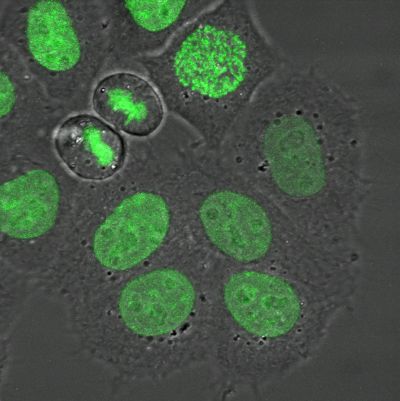
In the last decade our research has been directed more and more towards understanding of the mechanisms of transformation of one specific subtype, i.e. AML with chromosome 3q26 rearrangements leading to overexpression of the EVI1 gene. In 2014 (Groschel et al, Cell 2014) we discovered a new mechanism of transformation in AML with inv(3)(q21;q26) or t(3;3)(q21:q26). In each patient within this group we found that a unique enhancer of the gene called GATA2 (located at chromosome 3q21) had translocated to EVI1 (at 3q26), leading to the overexpression of EVI1. This translocation also resulted in GATA2 haploinsifficiency, due to the loss of its enhancer. In particular this led to the discovery that the hijacked enhancer changed into a hyperactive oncogenic super enhancer (OSE) with specific binding and activation of critical transcription factors (Smeenk et al, Cancer Discovery 2021). We identified many more OSEs hijacked by EVI1 in other 3q26 rearranges AMLs and demonstrated the importance of enhancer to promoter looping and the importance of CTCF sites for this interaction (Ottema et al, Nature Comm. 2021). We have generated multiple cell line models in which we tagged EVI1 with a GFP molecule, in order to study the mechanism of EVI1 expression using flow cytometry. By applying different CRISPR mediated genome editing approaches or by exposing the cells to small molecules we study ways to turn off the expression of the transforming oncogene EVI1 in AML. The outcome of these studies will help us to identify molecules able to interfere with leukemic cells growth driven by EVI1.
- Ruud Delwel, principal investigator
- Claudia Erpelinck-Verschueren, research technician
- Marije Havermans, research technician
- Stanley van Herk, research technician
- Emma Boertjes, PhD student
- Juliëtte Engelberts, PhD student
- Shivani Rajhansa, PhD student