
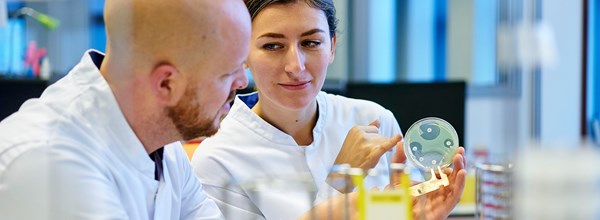

New discovery: DNA protects itself in loops under stress
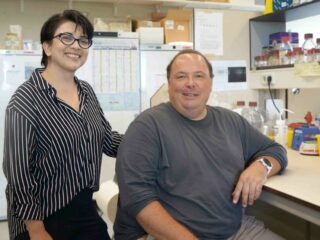
Nitika Taneja shows how cells can protect newly copied DNA when the copying process is under stress: it protects itself by stabilizing into loops. This protective organization may also help explain how tumor cells tolerate stress caused by chemotherapy. ‘When DNA is under stress, it doesn’t just get repaired, it hides inside protective loops.’
Nitika investigates why some cancer cells are resistant to chemotherapy
Nitika Taneja is working on a technique to better visualize the DNA of tumor cells. Through this work, she hopes to contribute to improved treatment options from the laboratory for people with cancer. ‘Sometimes half of the patients do not respond to a treatment.’
Organoids accelerate the search for antiviral drugs
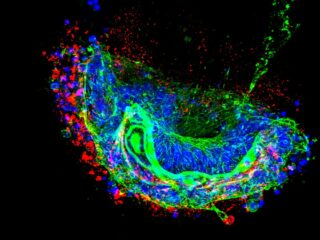
Finding drugs for outbreaks of new virusses often takes a lot of time. Researchers at Erasmus MC now show that this process can be sped up using organoids: miniature versions of human organs. Thanks to new techniques, these can now be used to expeditiously identify antiviral drugs.
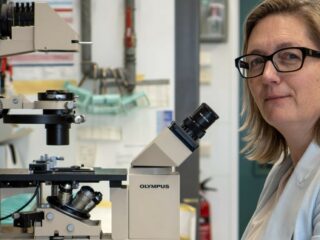
Researchers at Erasmus MC are gaining an increasingly clear understanding of vascular ageing. Two PhD theses from the research group of Ingrid van der Pluijm show that DNA damage plays a major role and that the ageing process is not necessarily irreversible. ‘Man is as old as his arteries.’
Repeated blood tests predict heart failure risk, especially in women
Repeated measurements of the blood marker NT-proBNP, a hormone fragment indicating heart strain, can accurately predict the risk of heart failure, particularly in women. Researchers from Erasmus MC published their findings in the scientific journal Mayo Clinic Proceedings.
DNA test: who benefits from chemotherapy for ovarian cancer?
Why does chemotherapy work for some patients and not for others? Researchers at Erasmus MC have found a promising clue in the dividing DNA of cancer cells. They hope this will enable them to predict which women with ovarian cancer will truly benefit from chemotherapy.
Science journalist receives ERC FRONTIERS grant to investigate how research at Erasmus MC addresses the women’s health gap
In 2024, the World Economic Forum estimated that women spend 25% more of their lives in poor health than men. At the heart of women’s health gap lies a long-standing assumption in biomedical science: the male body as the default model of human biology.