

DNA test: who benefits from chemotherapy for ovarian cancer?
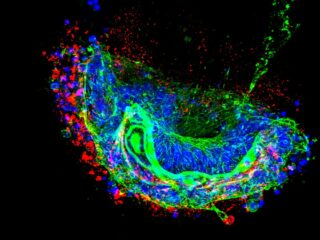
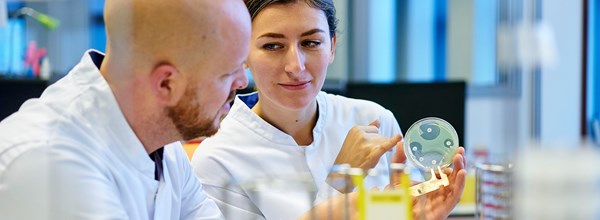
Why does chemotherapy work for some patients and not for others? Researchers at Erasmus MC have found a promising clue in the dividing DNA of cancer cells. They hope this will enable them to predict which women with ovarian cancer will truly benefit from chemotherapy.
Illness in older age is not a given: insights from 35 years of Rotterdam population research
The longest-running population study in the Netherlands – The Rotterdam Study – in the Ommoord district is 35 years old. Professor of Epidemiology and research leader Arfan Ikram is still enthusiastic. The insights from ERGO have led to policy changes in the Netherlands and beyond. ‘It has triggered a change in thinking.’
World’s first database for advanced cutaneous squamous cell carcinoma
Researchers at the Erasmus MC Cancer Institute have developed a nationwide database containing a wealth of information on cutaneous squamous cell carcinoma (CSCC). This resource will soon enable doctors to provide more personalized treatments for patients with this type of skin cancer.
New mechanism in BRCA2 tumors discovered: why chemotherapy sometimes fails
Why do some BRCA2 tumors eventually stop responding to chemotherapy? Researchers at Erasmus MC discovered how these tumors are still able to repair their DNA damage and how they evade the effects of chemotherapy.
Nearly €20 million to drive innovation in imaging technology
A national consortium led by Erasmus MC has been awarded €19.6 million through the NWO Large-Scale Research Infrastructures program. The consortium, known as AMICE (Advanced Multimodal Imaging Centers), will invest over the next decade in advancing and refining imaging technologies that are essential for cutting-edge biomedical research.
Screening reduces prostate cancer mortality, even after more than twenty years
A prostate cancer screening program can reduce prostate cancer mortality, even in the long term. That is the take-away from research conducted by Erasmus MC in a large European group of screened men. ‘The longer the follow-up, the more reliable the results.’
Science journalist receives ERC FRONTIERS grant to investigate how research at Erasmus MC addresses the women’s health gap
In 2024, the World Economic Forum estimated that women spend 25% more of their lives in poor health than men. At the heart of women’s health gap lies a long-standing assumption in biomedical science: the male body as the default model of human biology.