Hidradenitis suppurativa (HS) is a chronic inflammatory skin disease. This means the boils will recur. HS can occur in the armpits, groin, genital area, under the breasts, on the buttocks, the neck or the back. Initially, the boils look like small pimples. When the boils become bigger, tunnels form under the skin. Often also scar formation develops in the skin.
‘Deroofing’ literally means ‘removing the roof.’ During a deroofing surgery, the surgeon cuts out the skin where the boils are located. Your wound may be larger than you expect. This may happen, because the inflammation under the skin are often located deeper than what you can see on the surface.
The surgery will take place at either one of the following locations: Erasmus Medical Center or IJsselland Hospital. At either one of these locations, your surgery will be performed by your own physician. You will be informed about the location when the surgery planning staff calls you to plan the surgery date. This collaboration between hospitals helps to keep the waiting lists for deroofing surgeries as short as possible.
The surgery will take place at either one of the following locations: Erasmus Medical Center or IJsselland Hospital. At either one of these locations, your surgery will be performed by your own physician. You will be informed about the location when the surgery planning staff calls you to plan the surgery date. This collaboration between hospitals helps to keep the waiting lists for deroofing surgeries as short as possible.
Pre-operative examination
The anesthesiologist (the doctor responsible for the anesthesia during the surgery) will examine whether you are fit enough for surgery. This includes a consultation, physical examination, a health questionnaire, and additional tests if needed.During the consultation they will discuss which form of anesthesia you will receive: General anesthesia or spinal anesthesia. This decision for the type of anesthesia depends on the size of the area being operated on. If necessary, or if you request, spinal anesthesia may also be given.
Wound care materials
Before the surgery, you will receive a package of wound care materials at home (from Mediq). This contains all dressings needed for the first week after the surgery. If you or your partner cannot manage the wound care yourselves, we can arrange homecare for you.Urination funnel (women only)
Are you a woman and will you undergo surgery in the groin area? We advise you to purchase a urination funnel and to practice using it before surgery. This prevents urine from running into the wound or dressing, which can cause burning discomfort.You can buy a urination funnel at a drugstore or online.
Stopping smoking
Are you a current smoker? We advise you to quit smoking. Smoking slows wound healing and reduces your physical fitness. We understand that this can be very difficult. However, professional support is available. More information is available on www.rookvrijookjij.nl.What to bring
- Nightwear
- Toiletries
- Comfortable, loose clothing for after the surgery
The surgical team consists of an anesthesiologist, a dermatologist, and operating assistants. After receiving anesthesia (general anesthesia or spinal anesthesia), you will be asleep. The skin will then be cleaned and covered with sterile cloths. The surgeon removes the boils and tunnels down to the fat layer under the skin.
The wound
After the surgery, the wound remains open for secondary healing. The wound will not be closed with stitches to reduce the chance of new boils. The wound will heal by itself, which can take several weeks to months depending on its size and your general health. The scar that will remain, will eventually be smaller than the wound directly after surgery. However, a scar will always remain visible.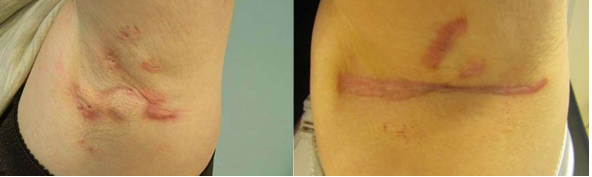
Left: armpit before surgery
Right: armpit with scar after surgery
Going home
Depending on the size and location of the wound, you may go home the either the same day or you will stay one night in the hospital and will be discharged the day after.Follow the pain medication escalation schedule below to experience as little pain as possible. Often, the pain starts around three days after the surgery. The amount of pain differs among patients. However, patients usually find the postoperative wound less painful than the inflammation before surgery.
If pain persists, follow-up with Step 2.
Continue taking paracetamol for the first weeks. Are you not experiencing pain anymore after 3-4 weeks? Try to quit taking paracetamol.
Step 2
If pain decreases, return to Step 1.
If pain persists, follow-up with Step 3.
Step 3
*You may not need Oxynorm; your doctor will discuss this with you.
Important: Oxycontin and Oxynorm are types of morphine. Therefore, long-term use can cause addiction. Only use these painkillers if you experience severe pain. Use Oxycontin and Oxynorm especially before wound care. Try to reduce use of Oxycontin and Oxynorm as soon as possible to prevent addiction. Return to step 2.
Pain medication escalation plan
Step 1| Medication | Dose | Max per day | Indication |
| Paracetamol | 2 × 500 mg or 1 × 1000 mg | 4x daily | Pain relief |
If pain persists, follow-up with Step 2.
Continue taking paracetamol for the first weeks. Are you not experiencing pain anymore after 3-4 weeks? Try to quit taking paracetamol.
Step 2
| Medication | Dose | Max per day | Indication |
| Paracetamol | As above | 4x | Pain relief |
| Naproxen | 250 mg | 3x | Pain relief |
| Omeprazole | 20 mg | 1x | Protects the stomach from irritating side effects caused by naproxen |
If pain decreases, return to Step 1.
If pain persists, follow-up with Step 3.
Step 3
| Medication | Dose | Max per day | Indication |
| Paracetamol | As above | 4x | Pain relief |
| Naproxen | 250 mg | 3x | Pain relief |
| Omeprazole | 20 mg | 1x | Protects the stomach from irritating side effects caused by naproxen |
| Oxycontin | 10 mg | 2x | Pain relief |
| Oxynorm* | 5 mg | 6x | Pain relief |
| Macrogol | 10 mg | 1 x | Prevents constipation caused by oxycodone |
*You may not need Oxynorm; your doctor will discuss this with you.
Important: Oxycontin and Oxynorm are types of morphine. Therefore, long-term use can cause addiction. Only use these painkillers if you experience severe pain. Use Oxycontin and Oxynorm especially before wound care. Try to reduce use of Oxycontin and Oxynorm as soon as possible to prevent addiction. Return to step 2.
Reducing pain medication
Pain usually decreases after approximately 14 days. If your pain decreases, you can start reducing your pain medication. First reduce morphine medication (Step 3), then naproxen (Step 2), and finally paracetamol (Step 1).If you did not choose to make use of homecare, you will have to take care of the wounds yourself. You must buy Betadine ointment yourself. Unfortunately this will not be reimbursed by the health insurance. Follow the steps below:
- During the first two weeks after surgery: rinse the wound twice daily in the shower.
- After two weeks: rinse once daily under the shower, then gradually every other day.
- Pat the wound dry with a sterile gauze.
- Apply a thin layer of Betadine ointment to the wound or silicone layer.
- Cover the entire wound with silicone layers.
- Apply an absorbent dressing. Have you underwent surgery under your armpit? Fixate the dressing with fixation tape.
- During your follow-up appointments in the hospital, new dressings will be ordered for you. If you run out of wound dressing before your appointment at the hospital, you can reorder directly from Mediq.
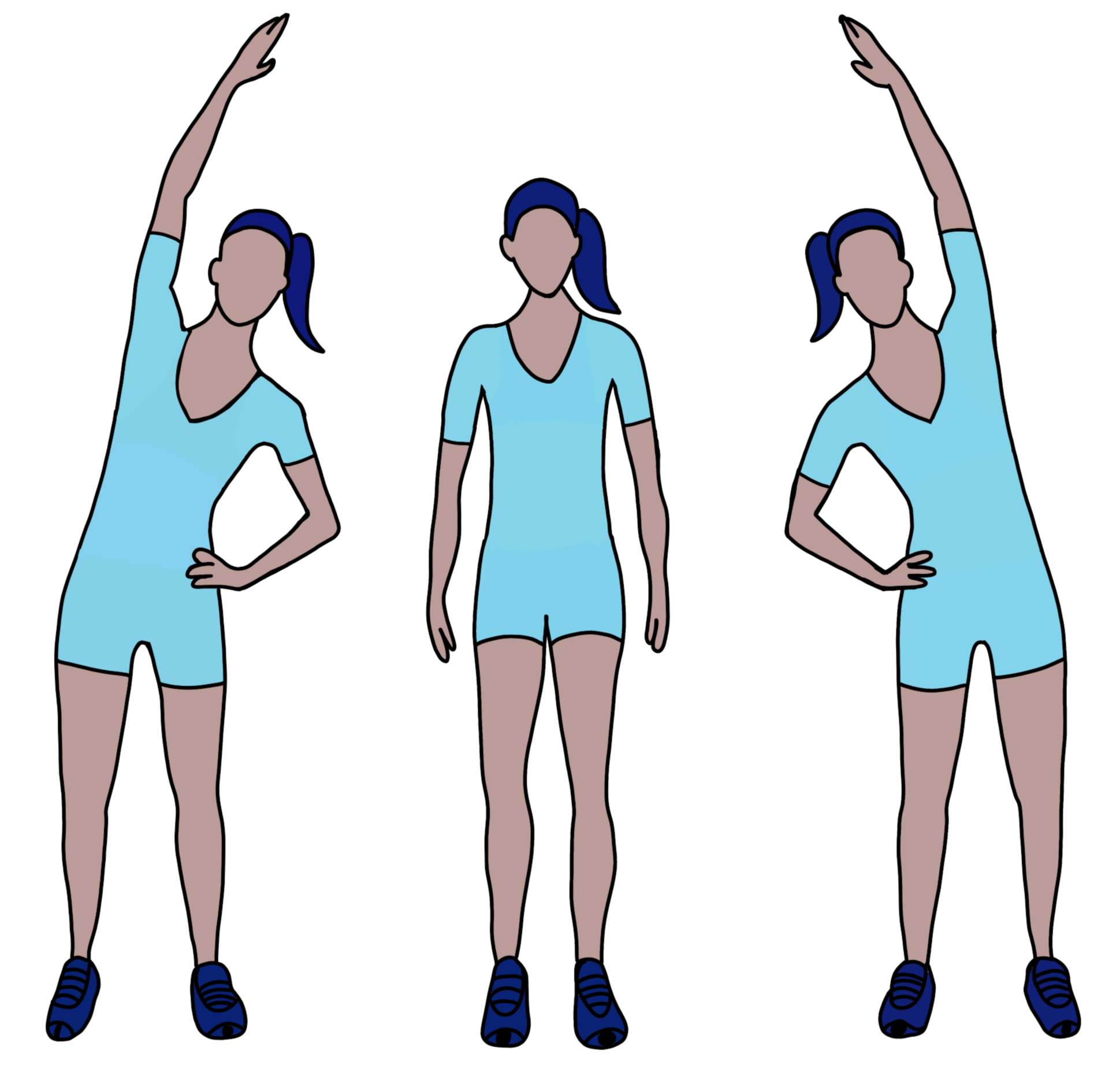
If you were operated on in the armpit, the scar may tighten. Move your arm and shoulder regularly to keep the scar flexible. Starting 48 hours after surgery, do stretching exercises several times per day to stretch the scar. Not doing so may lead to reduced ability to lift your arm (contracture).
One week after surgery you will visit the out-patient clinic for the first check-up. You will be seen by a nurse and he or she will check the wound and will discuss how it is going taking care of the wound is going. If needed, new wound dressings will be ordered for you.
Four weeks after surgery you will visit the out-patient clinic for a follow-up check-up. More appointments may be needed if necessary.
Four weeks after surgery you will visit the out-patient clinic for a follow-up check-up. More appointments may be needed if necessary.
Healthy nutrition helps your wound heal faster. We advise to eat or drink foods rich in protein. Doing so will help the wound to heal faster.
Examples of food high in protein:
Examples of food high in protein:
- Dairy (e.g., Vifit Protein, Breaker Protein, Skyr, low-fat quark)
- Cheese
- Meat (lean meats contain more protein)
- Poultry, fish, meat alternatives (tofu, eggs, soy products)
- Eggs
- Nuts and peanuts
- Vegetables. (Legumes contain the most protein. In addition, all types of beans and peas are also high in protein.)
Take into consideration that you will not be able to do everything after the surgery. Your ability to return to work depends on the wound location, wound size, and your job. Consult your occupational doctor and employer to discuss what is and is not allowed after surgery. It is important to keep moving cautiously.
Bleeding
There is a small chance of bleeding at home. In case a bleeding occurs, press a clean, rolled up tea towel firmly on the wound for 20 minutes without lifting it. Usually, this will be enough to stop bleeding. If bleeding continues, contact us. If you live far away from the Erasmus Medical Center, go to a hospital nearby.Numbness
Sometimes small skin nerves are cut during surgery. Unfortunately, we cannot prevent this. This may make the scar numb. In some cases, sensation may return after months or years. In other cases, sensation may never return.Wound infections
Because the wound is left open, infections are very rare, even near the genitals or anus. Is your wound warm, red, swollen, warm, does is produce pus or do you experience fever above 38.5°C? Then you might have a wound infection and you need to contact us. Do you have a yellowish to grayish layer on the wound? This is usually not an infection but wound coating. You can remove this with a damp gauze.Hypergranulation
If the wound closes too quickly, tissue can grow above the skin level. This is called hypergranulation and is also known as proud flesh. Due to hypergranulation the wound will heal slower and scars will be less aesthetically pleasing. Hypergranulation occurs often is not a need for worry. In case of hypergranulation, we will prescribe you an ointment which you can apply until the hypergranulation is not present anymore.Cording under the armpit (Axillary Web Syndrome)
If you underwent surgery of the armpit, a tight cord extending from the armpit to the inner arm may develop. This side effect is also known as Axillary Web Syndrome. This cord has the same color as the skin and runs from your armpit toward your elbow, along the inside of your upper arm. This can be painful. The hardened cord makes it harder to move your arm. The cord almost always disappears on its own after approximately 3 months. Are you experiencing a lot of pain? Then we can refer you to a specialized edema physiotherapist. He or she can help you with active stretching and massage techniques.Contact us if:
- The wound continues to bleed after 20 minutes of firm pressure
- The wound becomes warm, red, swollen, painful, or produces pus
- You have fever above 38.5°C
Short-term
The wound heals within weeks to months. This depends on wound size and your general health. It is unlikely that a new inflammation will appear on the scar.If it does, another (usually smaller) surgery may be needed.
Long-term
Deroofing reduces the chance of recurring inflammations. However, HS is a chronic disease. This means that new inflammations can occur around the scar. To reduce this risk, we advise to quit smoking and to maintain a healthy weight. Furthermore, we reduce the risk with medication which suppresses inflammation.Dermatology Out-Patient Clinic:
(010) 704 01 10
Email: afspraak.derma@erasmusmc.nl
Include surname, date of birth, and patient number.
Emergencies outside of office hours:
In case of emergencies outside of office hours, you can contact the Emergency Department of the Erasmus Medical Center: (010) 704 0 704 . The Emergency Room is available 24/7. Ask for the on-call dermatologist.
Mediq (wound care supplies):
(088) 888 9400
info@mediqcombicare.nl
(010) 704 01 10
Email: afspraak.derma@erasmusmc.nl
Include surname, date of birth, and patient number.
Emergencies outside of office hours:
In case of emergencies outside of office hours, you can contact the Emergency Department of the Erasmus Medical Center: (010) 704 0 704 . The Emergency Room is available 24/7. Ask for the on-call dermatologist.
Mediq (wound care supplies):
(088) 888 9400
info@mediqcombicare.nl
