The Child Brain Lab consists of three different rooms where cognitive, sensory, and motor assessments are carried out. In addition, participants (both patients themselves and parents) also complete questionnaires. Here you can find more information about the different assessments.
The questionnaires
The questionnaires are an important part of the Child Brain Lab. They include questions about behavior, emotions, and quality of life. There are questionnaires for the children as well as for the parents or caregivers. We share the outcomes of the questionnaires with the parents/caregivers and the involved healthcare professionals. They can use the results to tailor care to the circumstances and needs of you and your child.
The Thinking Room: cognition and developmental level
In the Thinking Room, we assess children’s cognition and development. We measure intelligence and language comprehension. We also study behavior here by observing the parent–child interaction during play.
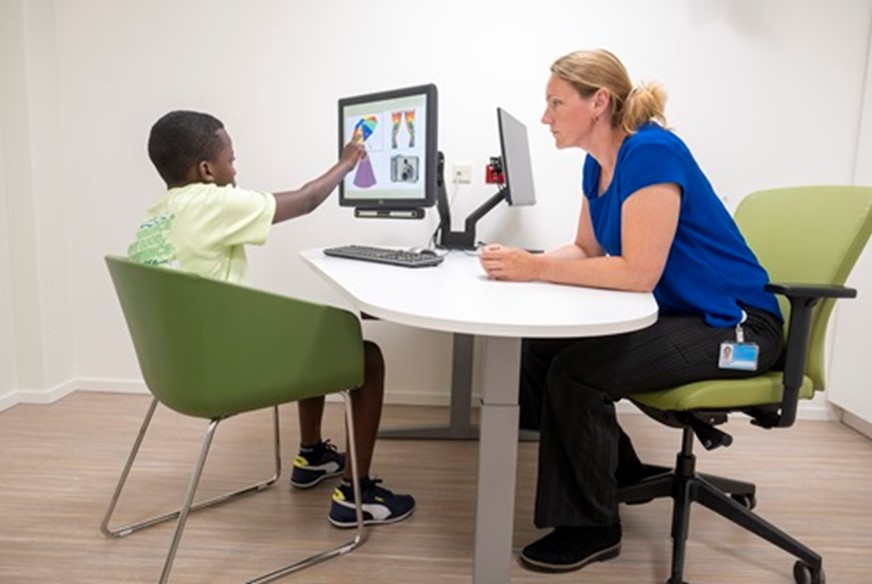
The Engine Room: sensory function
In the Engine Room, we test the senses and measure how the brain functions. We do this, among other things, by measuring brain signals with an EEG. The EEG can detect brain waves using a special cap placed on the child’s head. By using the latest EEG techniques, we are able to examine thousands of different brain connections. An EEG does not hurt—your child will not feel anything during this assessment.
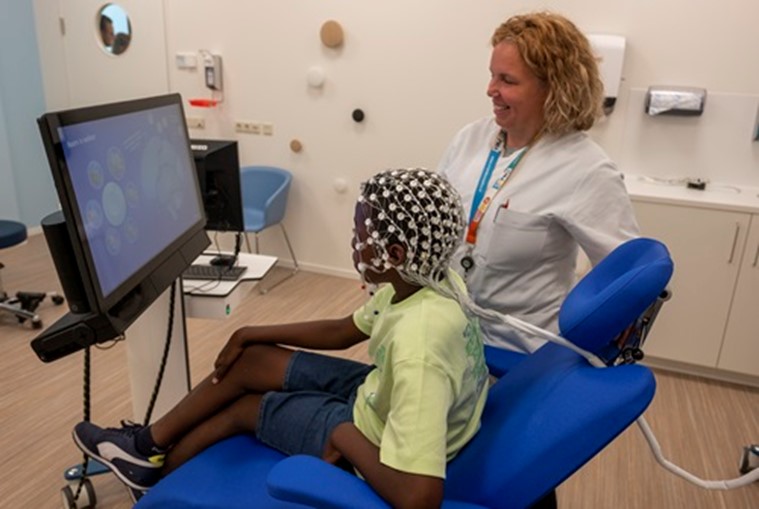
The Movement Room: motor skills
In the Movement Room, we study how a child moves. To do this, we use several tests, including a special walkway with sensors and cameras that analyze the child’s walking pattern. In addition, the child receives an activity monitor to take home. This allows us to measure how much the child moves during a week at home, at school, and in the neighborhood.
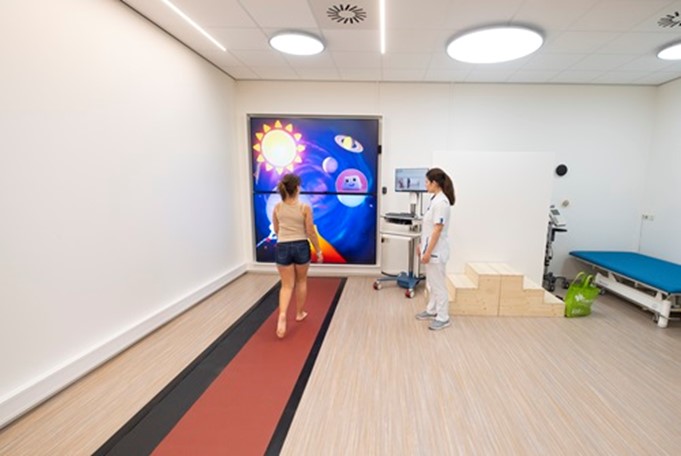
The Scans: head and brain structure
Finally, at the Child Brain Lab we also collect results from MRI scans of the brain and take a 3D photograph of the head.
